Accounting in 2027: The Shift to the Autonomous Back-Office
By DoDocs Editorial Team | September 21, 2026 | 6 min read
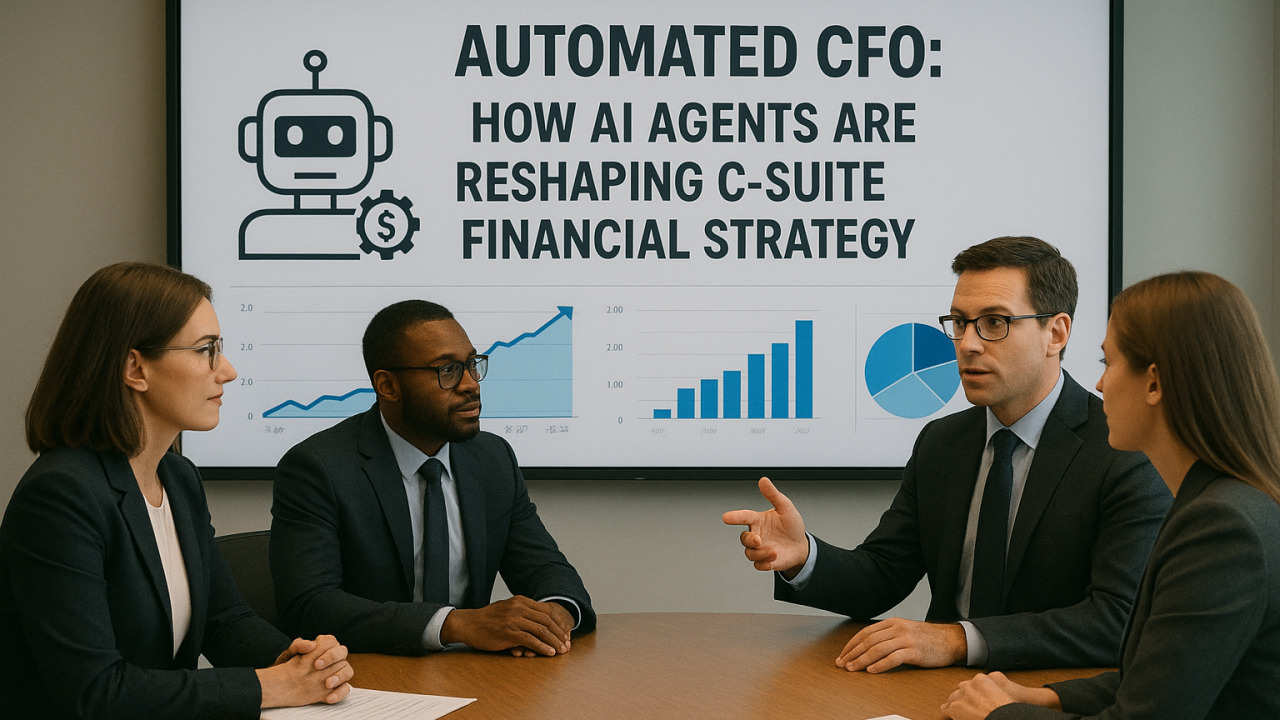
Accounting in 2027: The Shift to the Autonomous Back-Office
In the fast-moving world of corporate finance, the year 2027 doesn’t feel like the distant future—it feels like the inevitable next step. Just a few years ago, the industry was buzzing about "automation." We saw Robotic Process Automation (RPA) handle repetitive tasks and cloud accounting software make data entry a bit more bearable. But as we look at the defining 2027 finance trends, the conversation has fundamentally shifted. We aren't just automating tasks anymore; we are building the autonomous back-office.
The transition from 2020’s "connected tools" to 2026’s "AI agents" has culminated in a 2027 reality where the back-office doesn't just assist the business—it operates it. This is the era of zero-touch bookkeeping and strategic finance transformation, where the finance team moves from being the "historians" of the company to its "architects."
The Trajectory: From Automation to Autonomy
To understand the future of accounting, we have to look at the trajectory of the last decade. In the early 2020s, "automation" was largely synonymous with "rules-based processing." You could set up a rule to categorize a recurring Starbucks expense or use basic Optical Character Recognition (OCR) to pull a total from a PDF receipt. It was helpful, but it was fragile. If a vendor changed their invoice layout by a single pixel, the "automation" would break, requiring a human to step in and fix it.
By 2025 and 2026, we saw a massive leap forward with the rise of Multi-Agent Systems (MAS). These weren't just scripts; they were specialized AI entities capable of reasoning. Unlike the "dumb" bots of the past, these agents could understand context. One agent would extract data from a complex contract, another would cross-reference it against a bank feed, and a third would handle the ledger reconciliation. They could communicate with each other, resolve minor discrepancies, and even "reason" through a missing piece of information by looking at historical patterns.
As we enter 2027, these agents have graduated from being "helpers" to being the primary operators of the autonomous back-office 2027. This shift is characterized by its ability to self-correct, self-audit, and self-report. We have moved from "human-in-the-loop"—where a person had to click "approve" on every transaction—to "human-on-the-loop." In this new paradigm, the system handles 99.9% of the transaction volume autonomously, and humans provide the high-level oversight, strategic direction, and ethical guardrails.
A Day in the Life of a 2027 CFO
What does this actually look like on the ground for a modern finance leader? Let’s look at a typical Tuesday morning for Sarah, the CFO of a high-growth technology company.
In 2022, Sarah would have spent her Tuesday morning reviewing aging reports, chasing her VP of Sales for missing receipts from a London trip, and wondering why the month-end close was still dragging on fourteen days after the month ended. Her role was largely reactive, focused on cleaning up the past.
In 2027, Sarah opens her command center (no longer just a "dashboard") and sees a perfectly balanced ledger. Overnight, the autonomous system processed 4,500 transactions across four international entities. It didn't just record them; it verified them against local tax laws, corporate spending policies, and vendor contracts.
An alert pops up, but it’s not about a missing receipt. Instead, an AI CFO agent informs her:
"I noticed a 12% discrepancy in our AWS billing compared to the reserved instance contract we signed last quarter. I have already contacted AWS support, opened a automated ticket, and attached the relevant contract clause. I've also adjusted the cash flow forecast for Q3 to reflect the $40,000 credit we are owed. Would you like me to pause any other vendor payments until this is resolved?"
Sarah doesn't spend her time "doing" the accounting. She spends her time deciding how to reallocate that $40,000 to the R&D budget. The data is real-time, the audit trail is unbreakable, and the manual toil is gone. This is the power of autonomous business operations.
The Death of the "Month-End Close"
For decades, the "month-end close" was a period of high stress, long hours, and pizza deliveries to the office. Finance teams would scramble to gather data from fragmented systems, reconcile bank accounts, and produce reports that were, by definition, two weeks out of date the moment they were published. It was a "batch processing" mindset in a real-time world.
In the autonomous back-office, the "close" is a relic of the past. When every transaction is verified, categorized, and reconciled the second it happens, the ledger is in a state of perpetual close.
This shift to a real-time audit state changes the fundamental physics of business:
- Decision Velocity: Founders and CEOs can make major strategic moves based on what happened this morning, not what happened thirty days ago. If a marketing campaign is burning cash with no ROI, the system flags it instantly, not at the end of the month.
- Absolute Accuracy: In the old world, errors would "drift." A small mistake in January might not be caught until June, leading to a massive correction. In 2027, the agents catch discrepancies in milliseconds. If a double payment is attempted, it is blocked before the money ever leaves the account.
- Seamless Compliance: Tax and regulatory reporting have moved from being a "project" to being a "background process." The autonomous system has already categorized expenses according to the latest tax codes and generated the necessary filings. For an international company, the system automatically handles VAT, GST, and transfer pricing rules without a human needing to look up a single table.
The Human Element: From Accountants to Architects
The most common question when discussing the autonomous back-office is: "What happens to the humans?"
There is a fear that "AI will replace accountants." But as we look at the landscape in 2027, the opposite is true: the role of the finance professional has never been more critical or more rewarding. We aren't seeing the "end" of accountants; we are seeing their evolution into Strategic Finance Partners.
The strategic finance transformation means that when the "zero-touch" system handles the data entry, the human team focuses on high-value cognitive work:
- Exception Management: Handling the complex, high-stakes edge cases that require human empathy, ethical judgment, or nuanced negotiation. When a strategic vendor has a payment issue, it takes a human to maintain the relationship while the AI handles the technical fix.
- Strategic Advisory: Using the real-time data provided by the AI to advise on capital allocation, M&A strategy, and market expansion. Instead of spending 40 hours a month on reconciliations, a 2027 accountant spends that time modeling the financial impact of entering the Southeast Asian market.
- Agent Orchestration: Managing the AI systems themselves. This is the new "Manager" role. Accountants ensure the "rules" of the autonomous office align with the company’s evolving goals. They audit the AI, fine-tune its reasoning, and ensure its outputs meet the highest standards of integrity.
The "Great Reskilling" of the finance industry is well underway. The most successful professionals in 2027 aren't those who are best at Excel; they are those who are best at interpreting data and directing autonomous systems.
Preparing Today for 2027
If 2027 is the year of full autonomy, then the present day is the era of the "Great Foundation." You cannot flip a switch and become autonomous overnight. Autonomy is built on a bedrock of clean data and unified systems.
To avoid being left behind, visionary CFOs are taking three critical steps today:
1. Eliminating the "Software Zoo"
You cannot have an autonomous back-office if your data is trapped in ten different "silos" that don't talk to each other. Many companies suffer from a "Software Zoo"—one app for receipts, another for bills, a third for payroll, and a fourth for the general ledger. This fragmentation creates an "Integration Tax" that kills AI efficiency. The first step toward 2027 is moving toward a unified accounting OS where all data lives in a single, agent-accessible environment.
2. Standardizing the "Logic Layer"
Autonomy thrives on consistency. If every department in your company has a different way of submitting expenses or approving vendors, an AI agent will struggle. Companies are spending 2024 and 2025 standardizing their internal processes and digitizing every corner of their financial life.
3. Adopting Agentic Workflows Now
Don't wait for "perfect" autonomy. The path to 2027 involves incremental steps. Leading firms are already using platforms like DoDocs that utilize multi-agent systems to handle specific workflows like accounts payable or automated chase-loops for missing documentation. By getting the team comfortable with AI "colleagues" today, the transition to a fully autonomous back-office becomes a natural evolution rather than a jarring shock.
Conclusion: Autonomy is an Inevitability, Not a Choice
As we look toward the horizon of 2027, one thing is clear: the shift to the autonomous back-office is not a "nice-to-have" feature. It is a fundamental shift in how business is conducted.
In a marketplace where your competitors have real-time financial visibility, 100% accurate ledgers, and zero overhead for bookkeeping, staying with manual or semi-automated processes is a recipe for irrelevance. The "Autonomous Back-Office 2027" is the new gold standard.
The companies that thrive in this new era will be those that stopped seeing accounting as a "back-office chore" and started seeing it as a strategic engine. By embracing zero-touch bookkeeping today, you aren't just saving on headcount; you are freeing your human talent to do what they do best: build, innovate, and lead the company into the future.
The future of finance isn't about better software. It's about a back-office that thinks for itself. Is your business ready to hand over the keys?
More articles
The Annual ROI of Automation: Reclaiming 120 Hours of Founder Time
By DoDocs Editorial Team | October 19, 2026 | 3 min read
From Chasing Clients to Supervising Systems: Managing Modern Accounting Teams
By DoDocs Editorial Team | October 19, 2026 | 3 min read
Scaling Your Fractional Accounting Firm: Reclaiming 30+ Hours per Week per Bookkeeper
By DoDocs Editorial Team | October 19, 2026 | 3 min read